

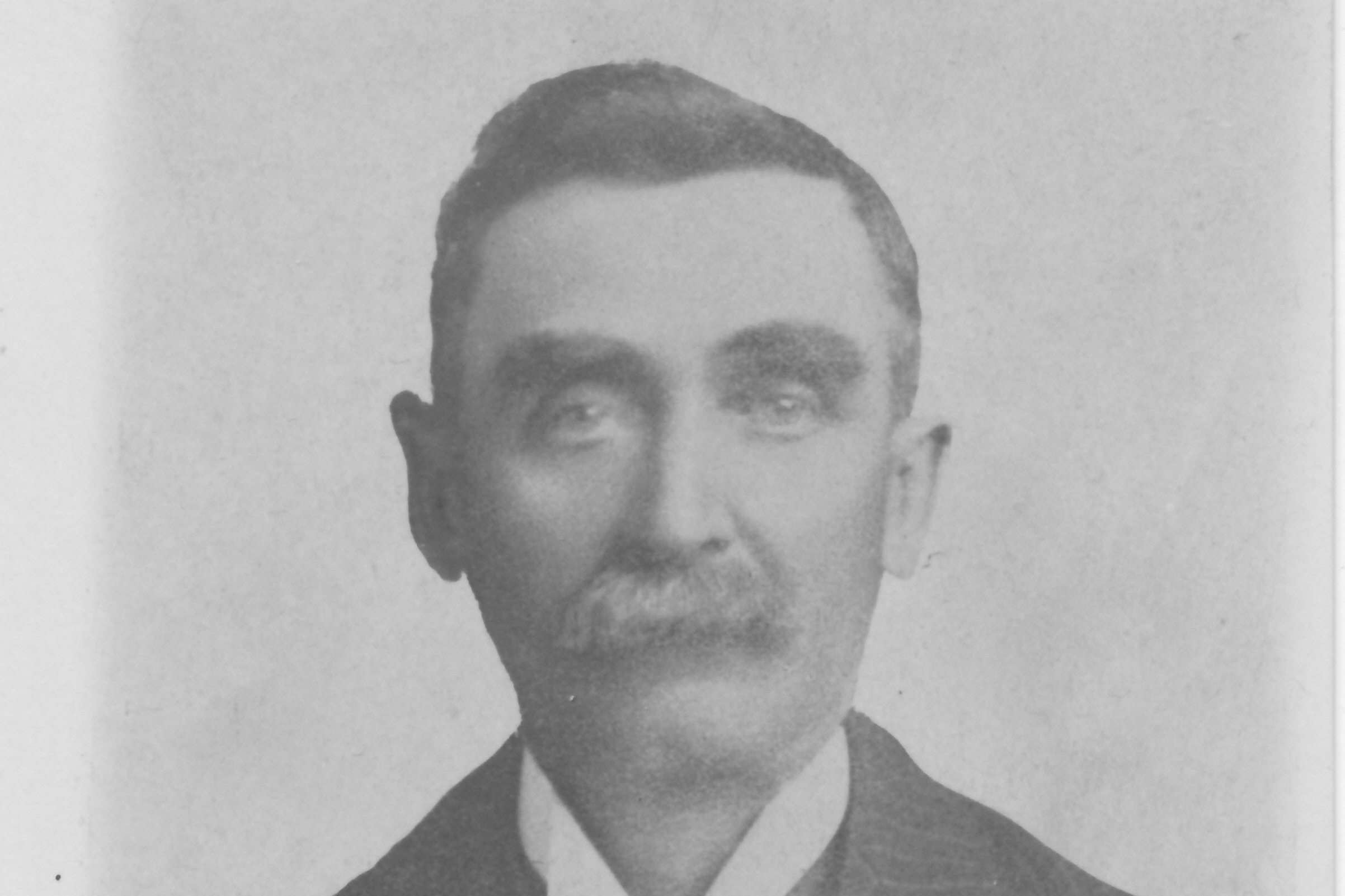
Charles Alfred Stillman-Philbrick’s adoptive father was Elroy P. “Bronco Jim” Philbrick who was born during October 1849 in Maine to Chandler N. Philbrick and Frances Noyes Philbrick. Emma Wilson Stillman started living with Elroy P. “Bronco Jim” Philbrick in about 1878. Emma went to work for Jim Philbrick cooking as he had the management of the stagecoaches based in Green River running west and east. There was also a stage station in Rock Springs and it was down under the bank on Killpecker Creek and Philbrick managed it too.
On the 1880 census, she was keeping house for Philbrick with her two sons. E.P. Philbrick and Emma Wilson Stillman were married in 1887. The following quote was from “Life History of Pearl Zimmerman” by Ruth Lauritzen in the Sweetwater County Museum: “After Emma lived under E.P. Philbrick’s roof for seven years, the law made him marry her; that’s how come she married grandpa Philbrick.”
Around 1887, Emma and Elroy Philbrick moved to Granger, and built the Granger Hotel. They built the Commercial Hotel in Rock Springs during 1889. Elroy and Emma adopted Bertha O. Smith who was born August 1889 while living in Rock Springs.
One story about Philbrick was he had the honor of saving the life of the aged Sacajawea when her nephew Basil deserted her on the plains. One account of this story was in the Rock Springs Miner June 13, 1934, edition and was written by Myfanwy Thomas Goodnough in June 1932 titled “Sacajawea Saved from an Unknown Grave by Cowboys.” “This is a true story told my father, Judge David G. Thomas, of Rock Springs, Wyoming, by one of the cowboys mentioned in the narrative, Mr. E.P. Philbrick; commonly known as Bronco Jim. Bronco Jim lived for many years at the Pony Express Station at Granger, later moving to Rock Springs, Wyoming where he has since died,”… “When I had finished reading the above to Mrs. Philbrick, she said, ‘Jim didn’t just tell Basil that he would report him for leaving her there to die. He told him that if he didn’t go back and get her, he would shoot him, and Jim meant it that time too, as he was mad.”
In Emma Wilson Stillman-Philbrick’s Oral History in Tom Cullen’s book, Rock Springs: A Look Back, she remembers, “E.P. Philbrick was deputy sheriff for ten years. He had a silver quarter smoothed and the insignia of the K. of P. engraved on it, and his name and Green River, Wyoming. He carried this with him out on the range for identification if anything should happen to him.”
Another story was as follows: “In the 1880s Jim Philbrick was deputized as deputy sheriff of Sweetwater County, Wyoming because the sheriff thought he was the toughest guy in Sweetwater County and could get the job, so Philbrick went into Brown’s Park, a notorious outlaw stronghold, to arrest the black rustler Isom Dart. While transporting him to Rock Springs, the buckboard in which they were riding overturned on an embankment and Philbrick was knocked unconscious. Isom, a huge man, lifted the buckboard off Philbrick and took him into Rock Springs for medical attention, earning Philbrick’s great respect. He arranged for Isom Dart’s release shortly thereafter.” E.P. Philbrick and Emma Wilson Stillman were married in 1887.
The following is an excerpt from page 5-6 of “Reminiscences with Emma Philbrick” by Williams Yates from Sweetwater County Museum in Green River, Wyoming: We lived at Granger then (when the Chinese Riots took place in Rock Springs), running the hotel. ‘We were busy, and making lots of money. We had the railroad crowd to feed twice a day about 75 of them in a crew; and we had a train stop there every day for lunch. Jim was deputy sheriff, and had been deputy under four different sheriffs,’ she said proudly. ‘When the trouble with the Chinese started Governor Warren wanted Jim to go to Rock Springs, but Jim told him he couldn’t go; as we had too much to do. He kept after Jim to go and finally came out there to get him. Governor Warren, who was Senator for so many years, and Jim Philbrick, used to ride the range together, and Warren was very fond of Jim. He told Jim he wanted someone at Rock Springs he could depend on, but Jim said first thing he would know our cook would get wind of it, and he would be gone, but finally, he persuaded Jim to go. Joe Young was sheriff, and lived here at Green River with his wife who wouldn’t let him go. ‘Well,’ Jim said, ‘Let Bert go,” that was his brother, who was deputy sheriff here. Jim went, and that left me and Jim’s’ brother and sister with all the work to do ourselves, and we couldn’t get any help. I often wonder how we got through it. What Jim told Warren came true. When the Chinamen ran away from Rock Springs they made for Evanston, and when they stopped at Granger they jabbered to the cook a while, and he got scared blew up and went with them. He said, ‘He’d come back plenty soon, maybe.’ When Warren got the soldiers to Rock Springs, Jim got to come home, and I was glad. After the soldiers, had been there a while they were worse than the miners for causing trouble. Jim told Warren if he’d take the soldiers out of there, they would have less trouble, as they seemed to think they could do as they pleased. We went on the train and saw the Chinamen’s houses burning, and we were ready to go home again. Jim said when the houses were burning, they could see Chinamen scampering to the holes and tunnels they had made in the ground, with powder kegs full of honey on their shoulders …. “Jim Philbrick carried the money to Superior for the first payday. When the first pay day was getting near, they were worried about how to get the money up there without being held up. Nobody wanted to go with it. Jim said he would take it up there without being held up. Jim said, get it ready, and I’ll get it up there; so, they locked it up in an iron box and gave it to him. After he had his supper that night, he went out again, and said he wouldn’t be home as he had some work to do. He was home again next morning before daylight, and got his breakfast and went to work. He didn’t say until several days after where he had been, because he knew I would have gone with him. When he got to the office, they couldn’t believe that he had delivered the box all right. That was before there was any road where it is located now. He had to go up the canyon from number 6 where we lived – about northeast from where they had just dedicated the monument at the Pony Express and Stage Station – and over the mountain to Superior, and came the same way back. He did that several times before anyone got next to it. Jim’s brother worked up there and when his little girl died, I went up there with Jim in the buggy, but I wouldn’t ride up that mountain. I got out and walked, and I walked when we came back too. He said I was foolish, but it didn’t look good to me.” E.P. or “Cowboy Jim” Philbrick was tenement overseer for the Union Pacific Coal company at Rock Springs for many years. By May 29, 1914, in the Rock Springs Rocket newspaper, Mrs. E.P. Philbrick had the dairy property of 6-room rock dwelling house with stables and outbuildings for sale. The dairy was right by the spring under the rock at Rock Springs.
E.P. Philbrick had a sudden illness (pneumonia) in January 1914, but was improving according to the January 8, 1914, Rock Springs Rocket newspaper. The following is an obituary from the Green River Star no. 24 (Green River, Wyoming), Friday, January 16, 1914: “Elroy P. “Bronco Jim” Philbrick who died January 9, 11914,from typhoid fever in Rock Springs, Wyoming. E. P. PHILBRICK PASSES BEYOND—E.P. PHILBRICK, one of the best-known citizens of this section, died at the Wyoming General Hospital in this city, Saturday morning at 8 o’clock, after an illness of nearly three weeks. Complications resulting from a severe attack of Typhoid-pneumonia were the cause of his death. Mr. Philbrick was born in the state of Maine in 1849. When quite a boy his parents moved to Wisconsin where they remained a few years, later going to the state of Minnesota, where they resided till 1867. When 18 years of age, Mr. Philbrick went to Omaha In 1868, he came to Rawlins, and from there he followed the construction of the Union Pacific to Granger.
During this time, he was employed in various capacities. One of his duties being to supply the construction camps with meats. He was married in 1887 and in the fall of that year he located permanently in Rock Springs. He built the Commercial Hotel in this city and was sole proprietor of this hotel. Selling the hotel, he engaged in stock raising and for some time ran a butcher shop in this city. He was a justice of the peace for several years. For many years he has been employed as collector and inspector for the U.P. Coal Co. He is survived by a wife, two sons and a daughter. Mr. Philbrick has two brothers, L. J. Philbrick of Superior, Wyo., and C. N. Philbrick of Fullerton, Neb. He has two sisters Mrs. C. W. Shirley of Madison, S.D. and Mrs. J. E. North of Rock Rapids, IA. He was a prominent member of the K. of P. of Rock Springs, of which lodge he had been a member for more than 25 years. In the passing to the great unknown of Mr. Philbrick, another pioneer has gone, another one of those who materially aided in developing the great resources of the west, has gone to a nobler and better land from which no one returns– and will he had not lived his allotted three score and ten, he had accomplished much during his life’ and it can be truthfully said that the world was bettered by him having lived — Rock Springs Adviser-News.”
The following is an excerpt from page 15 of “Reminiscences with Emma Philbrick” by Williams Yates from Sweetwater County Museum in Green River, Wyoming: “That’s a fine tribute to Mr. Philbrick that you have in your scrapbook, written by W.G. (Billy) Tittsworth, Avoca, Iowa, when Jim died… The following is what Tittsworth wrote to the Rock Springs Miner:– ‘I have just read the account of the death of E.P. Philbrick or “Bronco Jim,” which sounds better to me, as I knew him 50 years ago. When I say I knew him, it means I knew him free from restraint of the law and society. My dear reader, can you realize what that means, after the life you have been accustomed to. No, I fear not For the inward soul of man, reasons, thinks, and acts, according to circumstances and environments, and what the law or society may say or do to a good or bad actor, has much to do with all our actions in life. But, in the early days, in the old school where every man was a law into himself, and we all acted according to our own inward commands, men were known as they actually were, not as they seemed to be. I have no language at my command that can convey to you the respect I have for this man’s manly, respectful past life, under environment most favorable to the destruction of manhood in all except the very best and strongest of men and boys. I knew E.P. Philbrick as a boy. I knew him as a man. I knew his heart, his thoughts, his acts. I liked him then. I like him yet. He was far and above and beyond many of us in manhood. Dollars never seemed mountains to him, and justice was ant hills. If it had, you might call him great, and that is where we would differ. There is only one great thing on this earth than true manliness, and that is true womanliness.’ Eager to continue the conservation about her Jim, she said, ‘When Jim came out here, he was only a boy, and had no money. He had to get work along the road wherever he could, mostly at the forts as teamster. He was good with horses, and could usually get a job of that kind. He told me of working at a place called Plum Creek. The soldiers at the fort were hiring teamsters to haul timbers and bring in logs for the winter’s supply for the fort. They didn’t let any teamster go alone, as it was too dangerous. They had to keep all together. Quite a bunch of them. Once they had a narrow escape from the Indians. They were on their way to the timbers when they saw Indians and they had to abandon their wagons and run for their lives. He said they got inside the fort about the time the Indians were within shooting distance.’”