

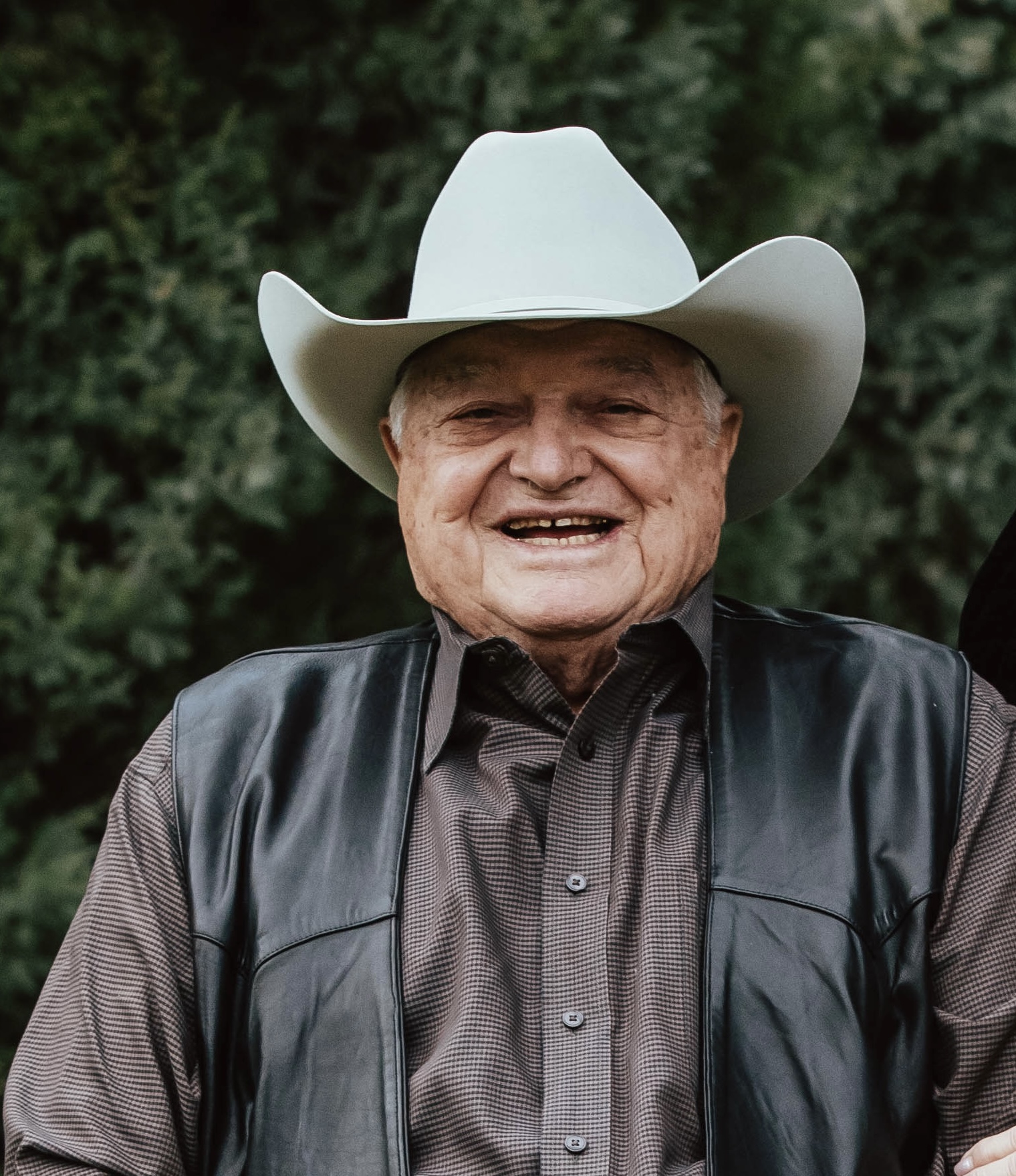
Bob Tarver is a true American cowboy in many ways, but there are qualities that distinguish him from the rest.
Bobby Lynn Tarver was born June 11, 1940, in Sheridan, to Lynn and Bernice (Robinson) Tarver. He was the older of two Tarver sons that would prove to be two of the best cowboys in Campbell County.
Bob always wanted to be a cowboy. It was his dream from a very early age to be just like his dad, rising before dawn, saddling his horse, and riding across the pasture checking fences, water, and livestock.
Bob’s father, Lynn Tarver, had a reputation for being an outstanding cowboy and horseman, and he was tough on his boys. His lessons came in dust and sweat, and the boys learned at a very young age how to ride a horse and be a “hand.” Riding was deeply woven into their everyday country life, from farm chores to riding horseback to school. Days were long and often began before sunrise, teaching lessons in responsibility and self-reliance. The boys didn’t have the luxury of loading a horse into a trailer and driving to the “back side” of the ranch; they rode their horses there instead. At times, they rode fifteen miles before they ever began gathering the pasture.
In 1946, when Bob was six years old, his family moved from Pilgrim Creek, south Broadus, Montana, to the Flint Ranch on the Little Powder River. His dad was hired to manage this ranch and was given the opportunity to start his own herd of cows. Two years later, they moved to the Gillstrap Place on Wildcat Creek where Bob’s dad was able to lease the ranch and continue to grow his cattle herd.
Bob’s first job was at nine years old when he was asked to help at the Daily Ranch. He rode his horse nine miles from the Gillstrap Place to the 20 Mile Ranch where Jim Daily hired Bob to help gather, sort, and brand their cattle. He was such good help, he spent the rest of that summer and the next summer working for Jim Daily, loving every day he got to spend on his horse doing what he loved.
In 1956, when Bob was 16 years old, Lynn was offered a lease on a larger ranch that would allow the family to expand their operation. Lynn, his young sons, and a couple of neighbors trailed their 200 cows 30 miles from the Gilstrap Place to their new home on Olmstead Creek. It took three days, trailing in the day and sleeping under the stars at night. This was one of the fondest memories Bob has of his early years of being a cowboy. Lynn leased the ranch from Albert Hunter which became a partnership between the Hunter family and the Tarver family that would last more than 65 years.
Bob attended high school in Gillette, where he participated on the rodeo team. He was such an athlete he roped calves, steer wrestled, team roped, and rode saddle broncs. He was the all-around cowboy his senior year at the Gillette High School Rodeo.
Bob furthered his education at Colorado State University. He missed the ranch and the lifestyle he loved but knew a college education was important. He stuck it out and joined the CSU rodeo team. He traveled to many rodeos from Texas to Colorado, where he successfully competed in calf roping and bronc riding. Because of Bob’s integrity, ability to inspire others, and extensive knowledge about the sport, he was elected by his teammates to be the president of the CSU Rodeo Club his senior year.
In 1962, Bob received a Bachelor of Science degree in Accounting from CSU and then did a tour in the army before returning home (1964) to pursue his love of ranching. He lived and worked the Hunter Ranch with his dad and brother Gary, running sheep and cattle, until his dad’s untimely death in 1968. The brothers took over running the Hunter Ranch while acquiring another nearby ranch, the Elk Creek place.
In 1966, the William Parks Ranch, which had been for sale for two years, was being offered to beginning and/or small producers through a government program that offered low interest loans. At 26 years old, Bob recognized this opportunity and got on the phone to convince his neighbors to join together to form a corporation that would purchase the beautiful 38,000-acre ranch. Bob believed this purchase would give the cattlemen in his community the chance to expand their operations. There were 18 interested parties that each paid $10 a share to become a member of the Trail Creek Grazing Association. Bob Tarver was instrumental in the organization, creation, and operation of this grazing association which still exists, 60 years later.
Bob married Nancy Espy in December of 1973, and together they had two sons, Robert (1974) and James (1976). Along with their cow herd, they began a horse-breeding program with two Hancock mares. Knowing the boys would need good horses to ride, Bob and Nancy took the mares to Bill Spratt, a renowned horse breeder with proven bloodlines and genetics. The horses they raised would go on to become foundational in shaping their ranching and rodeo legacy.
In 1975, Bob started steer roping on a horse he got from Bill Spratt called Chubby. They became quite a team. For the next couple of years, Bob was on the rodeo trail. He placed in many rodeos on the NRCA Circuit, was second at the NRCA Circuit Finals, placed in Cheyenne, and was the All-Around Cowboy at the Sheridan WYO Rodeo after winning the steer roping and placing in the team roping.
In September of 1977, Bob’s life changed forever. He and his brother Gary were flying in his Super Cub airplane, surveying the ranch, when the plane encountered a shear of unstable air. The aircraft went down, injuring both brothers. They didn’t return when expected so a neighbor, Johnny Morris, took to the air to search for them. He spotted the wrecked plane and immediately notified the family. A grueling four hours after their accident Vic Richards, the ranch foreman, rushed to the scene to help Bob and Gary. He sat holding Bob at just the right angle to ease the pain in his back until emergency services arrived. Bob was rushed to the Casper Hospital, where he was diagnosed with a severe spinal cord injury. He spent five weeks in Casper before being transferred to Craig Rehabilitation Hospital, where he spent the next five months recovering. Doctors told Bob he had only a slight chance of ever walking again.
Even with a life-changing event, Bob persevered. The doctors told him he would never ride a horse again. If he were to get bucked off, it would kill him. The doctors suggested he pursue a career in accounting and finance where he could safely sit behind a desk, but that did not settle well and he set out to prove the doctors wrong.
When Bob got home from Craig Hospital in early March, his journey continued with home therapy. With a will of steel, he worked every day to regain enough mobility and balance to ride again. He began with a stationary bike to train his legs to move and eventually switched to a regular bike as it was the closest thing to a horse. He rode the bike from the house to the barn and corrals and down the gravel county road, working tirelessly to build strength, mobility, and balance.
Even with his injury, Bob still had a ranch to run, and with the help of his family, he was determined to get the job done. He prepared his sons to carry on his legacy by guiding them with the passion he had always held for ranching with lessons rooted in horsemanship, horse training, and animal husbandry, relying on careful instruction and verbal guidance. Bob and Nancy raised their sons to know and understand every facet of ranch life, from mending fences and doctoring livestock to developing financial awareness and business sense. They wanted to give their sons the opportunity to be the cowboys Bob wasn’t sure he would ever be again.
Even though he was determined to get back up on that horse, it was a long road. Bob needed something to occupy his mind while his body was healing. He was approached by a good friend to run for an open commission seat in Campbell County. He had always been a natural leader and this was an opportunity for Bob to give back to the community that supported him and his family through a devastating time. He ran for the Commission seat and was elected in 1978.
In October of 1979, to Nancy’s horror, Bob was back in the saddle. With the help of his foreman, he was hoisted up onto his favorite horse and headed off to sort cows down the alley of the corral. He accomplished something monumental that was driven from desire and passion for the lifestyle he loved.
Bob never let his accident define who he was. He continued ranching on the Hunter Ranch, growing his cattle herd and seizing all opportunities to expand. He and Nancy were able to purchase the Hart Ranch in 1983, increase their shares in the Trail Creek Grazing Association and lease neighboring acres to run cattle. Bob cultivated a cattle operation that emphasized herd health, sustainable grazing, and generational thinking. Under his care, the ranch prospered: good genetics in the herd, careful pasture management to prevent erosion, and a focus on animal welfare. His dedication to raise and train good horses had been passed down to his children and his grandchildren, which is evident in their achievements on the ranch and in the arena.
Bob’s commitment to ranching continually extended beyond his fences. He served on local boards for decades, representing the voices of local producers. He worked to expand coal production, supported water-rights protections, and pushed for practical, common-sense policies that helped preserve rural livelihoods. Bob promoted programs and policies that enabled the construction of the Campbell County Public Library, Recreation Center, Senior Center, Child Care Center and Public Health Building. His service earned him respect from fellow ranchers and the broader community alike.
One of the projects Bob is most proud of was in 1983 with the purchase of the land, previously the Experiment Farm, to build a complex that would increase community interest and connection to agriculture. They constructed a facility with an indoor and outdoor arena where all community members could utilize the grounds for youth activities, 4-H, rodeos, and many other events. This project, The Camplex, continues today to unite the county and bring in revenue to the community.
Ranching is a lifestyle that Bob Tarver knows intimately. Over the past 80 years, he has successfully endured the highs and lows of the cattle business. He raised his family on the Hunter Ranch and then welcomed his boys back to raise their families. He created a legacy of cowboys and cowgirls that are straightforward, dependable, respected, and take pride in their workmanship. His legacy understands the realities behind being a true cowboy—the routine labor and the quiet rewards: a well-mended fence, a healthy herd, a sunrise from the saddle, and the rhythm of a life tied to seasons and soil. Through demonstration of hard work, true grit and devoted perseverance, Bob Tarver is a true American cowboy. He died in 2026.