

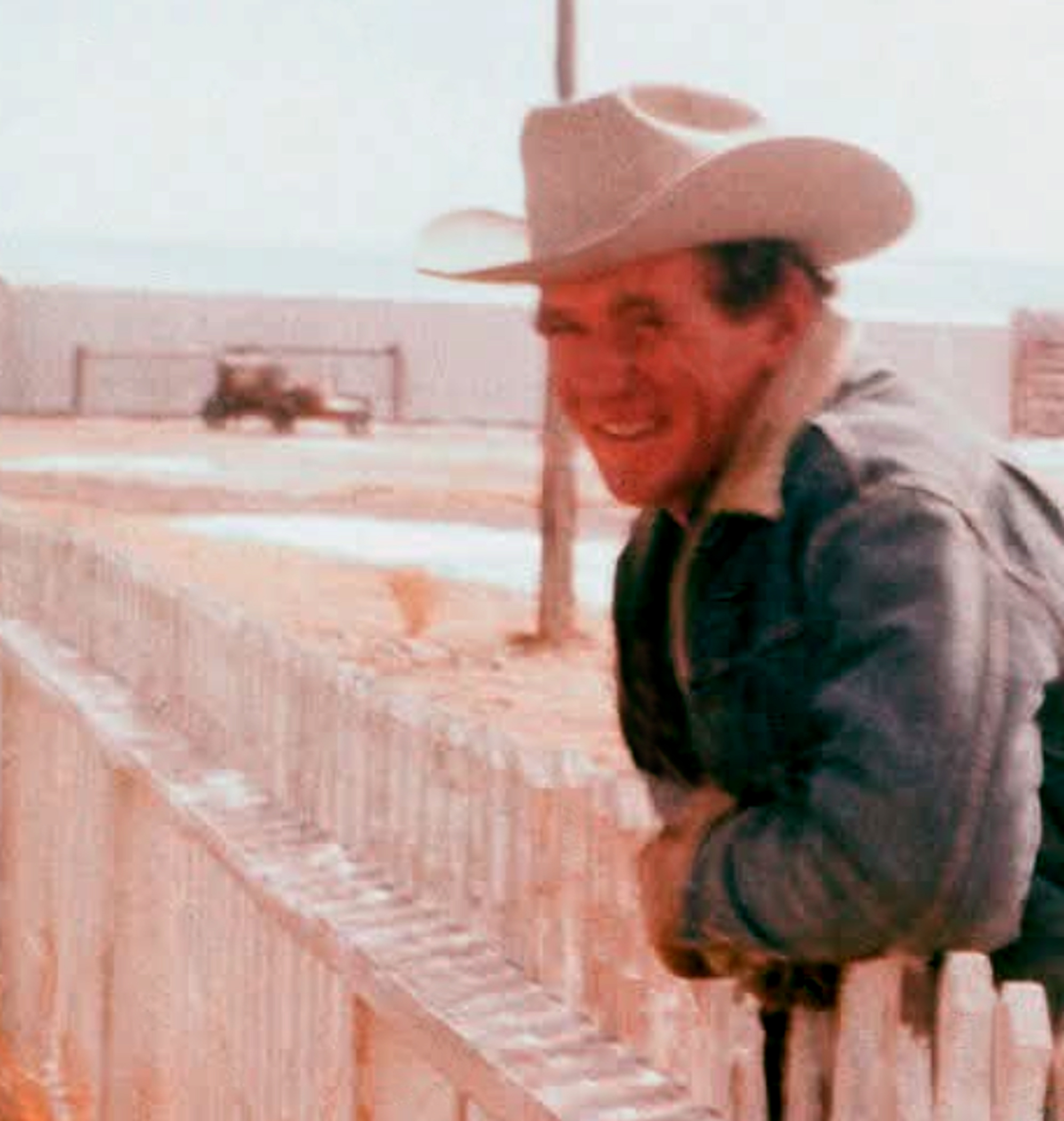
Alexander Marshall Gilchrist, Jr. was born March 16, 1931, in Kemmerer, to Alexander Marshall Gilchrist, Sr. and Catherine Elizabeth Mantle Gilchrist. His siblings were Jacketta Mantle Gilchrist Scarborough and Margaret Charlotte Gilchrist Mickelson.
His nicknames were “Alec,” “Alex,” but mostly “Al.” He graduated from Kemmerer High School in 1949. As a teenager, he got the opportunity to spend the summer of 1944 working as a cowboy for the Circle Cattle Company located in Big Piney. This ranch was owned by James and Mae Mickelson. He was hooked and worked for them for the rest of his life. He became a trusted foreman and working on all of the spread out ranch units. He spent two years (1951-53) serving his country in the US Army.
He married Toni Annette Profit on November 25, 1961. To this union were born two children: Katherine Kristine Gilchrist Sims and Clint George Gilchrist.
Alexander was highly skilled in every aspect of the cowboying and ranching life, whether it was roping, riding, doctoring animals or training his horses and dogs. He loved his job and was the epitome of a true cowboy.
One of his favorite jobs, especially later in life, was riding cattle on the US Forest Service grazing allotment on North and South Cottonwood Creeks in the Wyoming Range. Most of the time he was the sole rider covering dozens of miles every day checking on cattle, doctoring, moving cattle to new grass, spreading salt and keeping track of hundreds of cattle. When it came time to leave the forest, he led the back riders to gather all of the cattle. He took pride in finding every cow and calf possible to minimize loss. The cattle were then driven 25-30 miles to one of the home ranches.
As a young cowboy, he was lucky enough to participate in some of the 60-mile-long yearly cattle drives from Big Piney to Opal taking cattle to the railroad to be shipped to market before cattle trucks were common. At this time, he was also part of the big roundups before so many fences were put up and horse trailers were few.
As newlyweds, Gilchrist and his wife moved onto and were put in charge of the isolated Winkleman Place covering 9,000 acres. In the winter, Alexander would feed cattle with horses and a sleigh. He trained his own workhorses. At first there were two teams, Buttons and Bows and Schlitz and Coors, but Schlitz and Buttons were more compatible and became his feed team for many years. He also liked cutter racing and drove a cutter team for a few years.
He trained his own cow horses and cow dogs. He was very patient in his training practices. They were trained to come to him by signaling with his hands. He used this technique when catching his horse in the corral or pasture to start his work days. His favorite was named “Hornet” and he called him “Nut” for short. The dogs were trained not to bark and stay back from the herd to not agitate the cows protecting their calves. Hand signals would direct the dog to bring a cow back to the herd when it strayed off of the trail. They were always “top notch.”
His favorite dog he named “Sooner,” but nick-named her “Soona Pup.” He noted when she was a pup, she would “sooner” pee on the floor as to going outside. Needless to say, his wife didn’t let him have a lot of say in the naming of their kids. She did want Clint named Alexander Marshall Gilchrist III, but Dad put the kibosh to that name because of the length. Dad said that he wouldn’t inflict that on his son.
Al was the last generation of cowboy to be able to build his own ranch and herd on a cowboy’s wage. He filed a Desert claim in the late 1950s and built it on undeveloped land from nothing. As the most trusted cowboy, with the best setup for calving at his own ranch, he would take all of the Circle cattle first calf heifers (several hundred) each spring and calve them by himself. To keep a closer eye on them, he trained the whole herd to come to the pen around the calving barn on their own with just a whistle each night. On really cold nights, it was not uncommon for his family to wake up to a new born calf on the kitchen floor curled up in front of the heater for its first night.
Al had an excellent work ethic as well as being a perfectionist. His integrity and loyalty were above reproach. He always “rode for the brand” and got the job done no matter how difficult it was. There were many times he would be moving cattle in cold, wet weather where he felt like he was going to freeze to death, but would continue on until the job was done.
Once he and his friend, Buzz Wassenburg, were discussing the fact that Buzz’s two young sons had died from Cystic Fibrosis and Al had commented, “I don’t know how you got through it.” Buzz replied, “Well, Al, you know how many times we have driven cows in terrible weather and we don’t think we can go on, but we do and survive it.”
He was liked and respected by everyone who knew him, including the cowboys that were placed under his leadership. He was kind to children, animals, fellow men, and was a gentleman who showed the utmost respect for women. Artist and family friend Dele Ball said he was “the most honest man I knew” and used him as the model for her dirt pigment painting titled “Cowboy.” He was everything a good cowboy stands for. His children said they are so proud to call him “Dad.”
Al died from a heart attack on August 13, 1990, at the age of 59. His ashes were spread up on his beloved North Cottonwood of the Wyoming Range where he had spent countless hours horseback.